The process to identify the next Archbishop of Canterbury is underway and the Diocese of Canterbury’s Vacancy in see Committee – the group that manages and oversees the Diocese’s role in the process – has published its Statement of Needs.
The document incorporates views which were gathered as part of a public consultation as well as explaining what life in our diocese is like for those who live, work and worship here.
The online consultation had responses from people across Kent, including the views of children and young people in the Diocese who took part in consultation activities in schools and youth groups.
The Statement of Needs will be read by candidates as well as the Crown Nominations Commission (CNC), the body that is meeting to pray, reflect and ultimately nominate someone to be the 106th Archbishop of Canterbury. The CNC will make its nomination to the Prime Minister who, if he accepts will advise His Majesty the King, who will formally appoint the next Archbishop of Canterbury.
The document states: ‘The Archbishop is ‘our’ Archbishop alongside their responsibilities in the Church of England, the nation, the Anglican Communion and on the world stage. We offer in the Diocese of Canterbury and in the Cathedral Precincts a home, where the Archbishop will feel they belong.’
The Chair of the Vacancy in See Committee, the Venerable Dr Will Adam, said: “I would like to thank everyone who took part in our diocesan consultation to help the process of discernment of the next Archbishop of Canterbury. The responses gathered have helped us put together a Statement of Needs that captures the opportunities and challenges in our diverse corner of the country, reflecting the coastal, urban and rural communities and the church in all its variety in this diocese. The document will be enormously helpful to the Crown Nominations Commission and to candidates as we continue to discern who God is calling to be our next Archbishop.”
The process of identifying the next Archbishop of Canterbury began after Archbishop Justin Welby announced his intention to resign in November 2024.
The Archbishop of Canterbury is the Bishop in the Diocese of Canterbury alongside their national and global roles. The candidates and CNC will be informed by the themes from a wider consultation that took in the views of 11,000 people. It will sit alongside the Statement of Needs as well as other information provided by the National Church and Anglican Communion.
First published on: 5th June 2025
Page last updated: Friday 6th June 2025 10:31 AM
Opinion – 2 July 2025
Sally Hope ViaMedia.News There’s Another Church Abuse Crisis That’s in Every Congregation, and Very Much Closer to Home
Pat Ashworth Church Times Retired clergy ‘keeping the show on the road’
3 CommentsStatement from the Representative Body of the Church in Wales on Bangor Cathedral
The Representative Body of the Church in Wales issued a statement on Bangor Cathedral, and other related matters within the Church, yesterday. It is copied below.
These are these two press reports.
- Martin Shipton Nation Cymru Church releases details of motion that led to Archbishop’s resignation
- Gwyn Loader BBC News Church in Wales calls for investigation of diocese
Statement from the Representative Body of the Church in Wales on Bangor Cathedral
Posted: 1 July 2025
The Representative Body of the Church in Wales met on Tuesday June 24 to consider, among other matters, the situation at Bangor Cathedral.
A brief public statement was issued later that day:
“The Representative Body of the Church in Wales met today to consider matters relating to Bangor Cathedral. After extensive and detailed discussions, the meeting has been adjourned, and a statement will be issued in due course.”
That full statement is now being issued, comprising the full text of the motion approved by the Representative Body. (more…)
2 CommentsArchbishop of Wales – news and comment
Some of these articles appeared before the announcement of Archbishop John’s retirement.
Gavin Drake The Living Church Welsh Primate Resigns in Cathedral Leadership Scandal
Church Times Archbishop of Wales steps down, with immediate effect
Harriet Sherwood The Guardian Archbishop of Wales stands down after Bangor cathedral scandal
Gwyn Loader BBC News Archbishop retires amid cathedral behaviour failings
Martin Shipton Nation Cymru Church in Wales charities probed by Charity Commission
Here is the personal statement by the Archbishop issued on Monday this week: Statement on Bangor Cathedral Visitation Report implementation.
The process for electing a new Archbishop is in the Constitution. Within thirty days after a vacancy arises in the archbishopric, the senior Diocesan Bishop (currently the Bishop of St Asaph) shall summon each member of the Archbishop’s Electoral College to a meeting to be held not less than fourteen and not more than thirty days after the date of such summons. So the meeting must be held not later that 26 August.
The only reason for delay is if a see is vacant or becomes vacant within 14 days of the archbishopric becoming vacant. In that case the process does not start until the vacant see has been filled. But Bishop John has delayed his resignation from his see by more than 14 days, so the timetable above must be followed.
27 CommentsOpinion – 28 June 2025
Anne Richards Modern Church The Death of Us
Helen King sharedconversations Ceasefire?
Stephen Parsons Surviving Church Safeguarding and the Falsely Accused
26 CommentsRetirement of the Archbishop of Wales
The Archbishop of Wales has announced this evening that he has retired with immediate effect as Archbishop. He will also retire as Bishop of Bangor on 31 August. There are statements from the Archbishop, the Bench of Bishops and the Chair of the Representative Body in this press release, copied below.
Retirement of the Archbishop of Wales
Posted: 27 June 2025
Statement from the Archbishop of Wales, the Most Revd. Andrew John
Dear Friends,
I am writing to you to announce my immediate retirement today as Archbishop of Wales. I also intend to retire as Bishop of Bangor on August 31st.
It has been an enormous joy to serve in the Church in Wales for over 35 years. I cannot thank you enough for the privilege of working at your side for the sake of our Saviour Jesus Christ.
I would very much like to thank the clergy and congregations of this wonderful diocese before I retire and I will be in touch again about the way in which this might happen.
Thank you, and Christ give you joy and peace in believing.
+Andy
Statement on behalf of the Bench of Bishops of the Church in Wales
The Bishop of St Asaph, the Rt Rev’d Gregory Cameron, Senior Bishop of the Church in Wales, spoke on behalf of the Bench of Bishops:
“As Archbishop Andrew announces his retirement today as Archbishop of Wales and his forthcoming retirement as Bishop of Bangor, the Bench of Bishops of the Church in Wales wish to express our heartfelt thanks for his service to the Church during his ministry.
“Andy has dedicated thirty-six years of his life to ordained ministry in the Church in Wales, and has served with commitment and energy to proclaim the Christian Gospel and draw people to deeper faith in Jesus Christ. He has given so much for the good of the Church in Wales. He now lays down his considerable responsibilities in the same spirit in which he has served for these decades.
“We offer most sincere thanks, and our commitment to hold him and his family in prayer at this time and in the days ahead.”
Statement by Professor Medwin Hughes, Chair of the Representative Body of the Church in Wales
As Archbishop Andrew retires from his duties, I wish to thank him on behalf of The Representative Body of the Church in Wales for his hard work, commitment and vision during his time as Archbishop of Wales and Bishop of Bangor.
The Archbishop has led the Church through a time of immense change and challenge. Throughout his time in post, has shown his deeply felt concern for the welfare, not just of the Church itself, but of our society and the world as a whole.
I know that everyone who has worked with The Archbishop during his ministry will have been touched by his pastoral care and his profound dedication to improving the life of the Church in Wales and of the wider community.
As he now passes that work to other hands, I want to place on record my sincere gratitude for all he has achieved, together with my admiration for the integrity of his ministry to the people of Wales. All members of the Representative Body will continue to hold The Archbishop and his family in our prayers.
40 CommentsBishop of St Edmundsbury and Ipswich
The Prime Minister’s Office has announced that the next Bishop of St Edmundsbury and Ipswich will be the Rt Revd Joanne Grenfell, currently Area Bishop of Stepney in the diocese of London. Details are in the press release copied below. The diocese of St Edmundsbury and Ipswich has more here, and the diocese of London has this.
26 CommentsAppointment of Bishop of St Edmundsbury and Ipswich: 27 June 2025
The King has approved the nomination of The Right Reverend Dr Joanne Woolway Grenfell, Area Bishop of Stepney, in the Diocese of London, for election as Bishop of St Edmundsbury and Ipswich.
From: Prime Minister’s Office, 10 Downing Street and The Rt Hon Sir Keir Starmer KCB KC MP
Published 27 June 2025The King has approved the nomination of The Right Reverend Dr Joanne Woolway Grenfell, Area Bishop of Stepney, in the Diocese of London, for election as Bishop of St Edmundsbury and Ipswich, in succession to The Right Reverend Martin Alan Seeley, following his retirement.
Background
Joanne Grenfell was educated at Oriel College, Oxford and the University of British Columbia, Vancouver. She trained for ministry at Westcott House, Cambridge. She has a DPhil from Oxford and was Lecturer in English at Oriel College before ordination.
She served her title in the Kirkby Team Ministry in the Diocese of Liverpool and was ordained Priest in 2001. In 2003, Joanne was appointed joint Priest-in-Charge of Manor Parish in the Diocese of Sheffield with responsibility for Ripon College Cuddesdon’s urban theology placement programme. In 2006, Joanne became Diocesan Director of Ordinands and Residentiary Canon of Sheffield Cathedral, and in 2008 she took on the additional role of Dean of Women’s Ministry.
From 2013, Dr Grenfell served as Archdeacon of Portsdown in the Diocese of Portsmouth. In 2019, she took up her current role as Area Bishop of Stepney, in the Diocese of London. She has been the lead Bishop for safeguarding since May 2023.
General Synod Papers – July 2025
The Church of England’s General Synod will meet in York from 11 to 15 July. The agenda and papers for the meeting were released today.
- Outline of Business (updated 25.06.2025)
- GS 2400 Agenda July 2025
- GS 2401 Report from the Business Committee [a helpful guide to the business before Synod]
There are links to the papers below the fold, grouped by the day on which they are due to be debated. There are also a number of GS Misc papers and items of deemed and contingency business.
Also available are these two zipped files.
11 CommentsPre-synod press release
The Church of England’s General Synod will meet in York next month. The papers were released today along with the following press release. I will publish a detailed list of papers later today.
Christian responses to war, people coming to faith, and measures to support clergy on Synod agenda
A major package of proposals to support clergy; signs of growth in church attendance, and how Christians can respond to potential for armed conflict are among topics on the agenda at the upcoming General Synod.
Members of Synod will gather in York for their annual residential meeting from July 11 to 15, with a wide-ranging agenda of legislation, topical debate and discussion.
There will be several items of financial business including debate on the Church of England’s recently announced £1.6 billion three-year national spending plans and a request for Synod to approve proposals to increase clergy pensions.
Significant time will be set aside for the final stages of the legislation to set up the National Redress Scheme for victims and survivors of Church-related abuse.
Amid war in Ukraine and the Middle East and tensions around the world, Synod will be hearing from a senior member of the Armed Forces reflecting on the current global context and how churches can respond to armed conflict. Synod papers published today also include a reflection by the Church of England’s Bishop to the Forces, Hugh Nelson, on how parishes can support members of the armed forces and their families in their communities and addressing questions of how the Church can serve its mission in times of conflict. (See GS Misc 1428)
Following four years of overall growth in church attendance, Synod will spend some time considering church growth and outreach, drawing on research by the Archbishops’ Council on factors which help churches grow.
A paper by the Rev Kate Wharton, a member of Archbishops’ Council and Prolocutor of the House of Clergy, explains: “This is a moment of opportunity. Churches are revitalising, starting new services, planting, and reaching people in new ways.
“The Church is rediscovering its calling to be younger, more diverse and rooted in every community.
“All of this reminds us: growth is God’s work. Our task is to pray, prepare, and respond with faith.”
23 CommentsAlternative Ordinations in England
Law & Religion UK has this exclusive report:
Alternative Anglican Ordinations: seven South African deacons
44 CommentsSeven lay ministers from dioceses across the Church of England were ordained in May 2025 by a visiting Anglican bishop from South Africa. In this guest post, Andrew Atherstone provides the first report of this event, based on interviews with several of the leading participants.
On Wednesday 21 May 2025, the Archbishop of York received notification from the Reformed Evangelical Anglican Church of South Africa (REACH SA) of their plans to ordain “missionary clergy” for ministry in England…
House of Bishops – minutes for March 2025
These are now available online. Earlier minutes are here; scroll down to “Documents”.
4 CommentsStill no answers to safeguarding questions
TA readers may recall that in 2023 and 2024, letters were sent to both the archbishops by Richard Scorer, on behalf of his Client ‘Gilo’, asking questions about the involvement of William Nye, members of the National Safeguarding Team, and others in a meeting with Ecclesiastical Insurance held in 2016. To date, no substantive reply has been received.
Yesterday, a third letter was sent. This time it has been sent to the Church Commissioners, since the Archbishops’ Council has now failed repeatedly to answer. No doubt the topic will yet again by raised at the General Synod next month.
- A PDF of the most recent letter is here.
- For reference the two earlier letters were also included:
2023 letter
2024 letter
All of this has been rehearsed on Thinking Anglicans before. Here are some of the earlier articles:
Elliot Review Redux
Safeguarding Bishop admits that survivor was misled
Getting answers to safeguarding questions is slow
1700 years since the Council of Nicaea
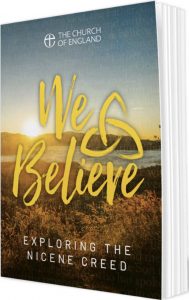 The Council of Nicaea met in the summer of the year 325, so that this year marks the 1700th anniversary of the Council, the first such gathering.
To mark the anniversary, the Church of England has published a small book, We Believe: Exploring the Nicene Creed which “explores the theological depth and contemporary relevance of the Nicene Creed — one of the most enduring and universal expressions of Christian faith”. It contains 24 reflections and prayers, one on each statement of the Nicene Creed, and can be used daily, 6 days a week across 4 weeks, though the reflections are not dated and can easily be used at other times. It is all also being included over the next few weeks in the Everyday Faith app. There’s a press release here, and for further information scroll down this page at the Church of England website.
The booklet of reflections was produced by a small subgroup of the Liturgical Commission, and the accompanying page (linked above) has extra resources that can be used to shape a study course or a sermon or sermon series or other activity. There’s also an article on the use of the Nicene Creed in the liturgy.
The Council of Nicaea met to resolve two major controversies, creating the statement about how it understood the relationship between God the Father and God the Son (a statement extended and revised at the Council of Constantinople in 381 to form what we call the Nicene Creed, give or take a word or two). And it agreed that Easter should always be kept on a Sunday rather than on the spring full moon itself.
In addition to this Church of England material, Transforming Worship (formerly called Praxis) in its June newsletter, available to subscribers, also included a couple of articles by two of the booklet writers: Jo Kershaw on the Nicene Creed and me on the Date of Easter, which is a canter through the history and significance of the date, from the first century to the twenty-first.
44 CommentsOpinion – 21 June 2025
Lizette Miller Pray Tell Blog An Overview of Anglican Liturgical Music:
Part I
Part II
part III
Paula Blake Women and the Church Lay people should be consulted in decisions about alternative episcopal oversight
108 CommentsChurch of England responds to House of Commons votes
There have been two instances this week of votes in the House of Commons on issues where members have been free to vote in line with their personal opinions. The Church of England has issued press releases in each case.
First, a change to the law on abortion was approved, by way of an amendment to the Crime and Policing Bill. As Law and Religion UK explains:
“For the purposes of the law related to abortion, including sections 58 and 59 of the Offences Against the Person Act 1861 and the Infant Life (Preservation) Act 1929, no offence is committed by a woman acting in relation to her own pregnancy.”–(Tonia Antoniazzi.)
This new clause would disapply existing criminal law related to abortion from women acting in relation to her own pregnancy at any gestation, removing the threat of investigation, arrest, prosecution, or imprisonment. It would not change any law regarding the provision of abortion services within a healthcare setting, including but not limited to the time limit, telemedicine, the grounds for abortion, or the requirement for two doctors’ approval.”
The Bishop of London made this comment:
“Women facing unwanted pregnancies are confronted with the hardest of choices. Ultimately, they require compassion and care in order to support them fully in the heart-wrenching decision they must take. They should not be prosecuted.
“However, decriminalising abortion can at the same time inadvertently undermine the value of unborn life. The amendment passed to the Crime and Policing Bill[*] may not change the 24-week abortion limit, but it undoubtedly risks eroding the safeguards and enforcement of those legal limits. Women suffering from coercion, or those who are victims of sexual or domestic abuse, would be the most vulnerable to the proposed change, which does not consider improvements to abortion care, nor address the inadequacies of the ‘pills by post’ assessments. These concerns are well set out in the letter signed by over 200 clergy published in the Telegraph this morning.
“Considering any fundamental reform to this country’s abortion laws should not be done via an amendment to another Bill. There should be public consultation and robust Parliamentary process to ensure that every legal and moral aspect of this debate is carefully considered and scrutinised. We need a path that supports women, not one that puts them and their unborn children in the way of greater harm.”
The actual text of the letter mentioned above can be found by scrolling on this page.
Second, MPs in the House of Commons voted in favour of the Terminally Ill Adults (End of Life) Bill, with 314 votes in favour and 291 against, a majority of 23. The Bishop of London’s full comments were contained in this statement:
49 CommentsOpinion – 14 June 2025
Timothy Goode ViaMedia.News The Body the Church Forgot: Reimagining Sacred Space from the Margins
Phil Groves ViaMedia.News Some Things You Never Forget
The Bishop of Hereford has responded to Monday’s announcement of the Church of England national spending plans, as reported here in the Church Times.
Shrink grants in favour of funding parish clergy, Bishop of Hereford urges Church Commissioners
Opinion – 11 June 2025
Alice Goodman Prospect The strange ritual of confirmation
Helen King sharedconversations Another one bites the dust: resignation, LLF … and murder?
Trevor Thurston-Smith The Pensive Pilgrim Hymns : Entering the Minefield
123 CommentsChurch Commissioners Annual Report for 2024
The Church Commissioners published their annual report for 2024 last week, and a press release which is copied below.
Church Commissioners for England endowment fund delivers 10.3% return in 2024
06/06/2025
The Church Commissioners for England, which manages the Church of England’s endowment fund, delivered a 10.3% return in 2024, marking the sixteenth consecutive year of positive returns, with the fund now valued at £11.1bn at the end of 2024. (more…)
5 CommentsChurch of England national spending plans
The Church of England has announced its national spending plans for 2026-2028, in particular how it will use the funds made available by the Church Commissioners. The text of this morning’s press release is copied below; there is also a helpful video.
Major investment in local churches and parish clergy as £1.6bn three-year national spending plans unveiled
09/06/2025
- Church Commissioners’ funding towards work of the church set to leap by 36 per cent in the three-year period 2026-28, amounting to the biggest distribution in Church’s history.
- Indicative distributions of £4.6 billion over nine years from 2026 to 2034.
- Typical stipend set to rise 10.7 per cent next year under new proposals as clergy well-being put at centre of spending plans. Boost in support for churches in lowest income communities.
The Church of England today unveils plans to invest more than £1.6 billion towards sharing the good news of Jesus Christ and serving local communities over the next three years – a 36 per cent rise on the national funding made available in 2022 for the current three-year period. (more…)
23 CommentsCanterbury Statement of Needs published.
The Diocese of Canterbury’s Vacancy in See Committee has published its Statement of Needs. There is also an article with background information on the diocesan website; it is copied below.
Diocese of Canterbury publishes document to help discern next Archbishop
Martyn Snow steps down as lead bishop of LLF
Martyn Snow, the Bishop of Leicester, has stepped from his role as Lead Bishop for Living in Love and Faith. He published the following statement on his Facebook page earlier this afternoon.
156 CommentsWith a very heavy heart, I have decided to step down from my role as Lead Bishop for Living in Love and Faith. I am hugely grateful to the staff team that I have worked with over the last 18 months and similarly the Working Group members who have given hours of their time to seek an agreed way forward in the Church of England on matters of sexuality, relationships, and marriage. I hope it may yet be possible to reach such an agreement, but I don’t think that can happen under my leadership. I will not be making any further comments.