RW interview: more press coverage
Further Update
The archbishop’s own website now also carries a transcript of the TV programme as transmitted.
Update
Ruth Gledhill’s blog now carries the full transcript of this interview. Read Archbishop’s interview with Sir David Frost. This is the full, unedited version.
Telegraph coverage of yesterday’s television interview is comprehensive:
Archbishop warns gay issue may ‘rupture’ Church and Williams: Cuba camp is setting a dangerous precedent America both by Jonathan Petre and
Missed chance to speak out on Darfur’s bloody conflict speaks volumes by David Blair, Africa Correspondent
Guardian Stephen Bates Archbishop warns of split over gay bishops
The Times Ruth Gledhill Archbishop attacks Guantanamo
Ekklesia Archbishop of Canterbury condemns Guantanamo Bay camp includes useful back links to earlier Christian protests about this.
17 CommentsRowan Williams interview on TV
The BBC TV programme The Heaven and Earth Show this morning carried an interview of Rowan Williams which had been conducted in Khartoum by David Frost.
The full video interview (nearly 20 minutes) is now on the web, here.
At present the programme’s website carries only a brief note about it. However, the interview was also discussed on the BBC Sunday radio programme. The website for that programme, which used to be updated within hours of the live transmission, has now announced that it will not be updated until Monday morning. So I cannot at present give a link to the individual item. There is a link to the audio of the entire (45 minute) programme here (Real Audio). The discussion – Ed Stourton talked to Ruth Gledhill – of the Rowan Williams interview, which includes audio clips, starts about 30.5 minutes in and lasts about six minutes.
Update the programme details page has now been updated. The direct link to the 6 minute audio item is here.
Other reports of this interview:
BBC Archbishop fears Church ‘rupture’ NB story has been rewritten and now headlined Williams attacks Guantanamo camp
Telegraph Archbishop fears gay ‘rupture’ of Anglican church
Reuters Anglican leader criticises Guantanamo, terrorism
Press Association Archbishop condemns Guantanamo camp
Associated Press Guantanamo Worries England’s Archbishop
women bishops – an MP intervenes
Ruth Gledhill has a report on her blog today, Church-State war looms over women bishops.
She reports that Chris Bryant, who is a Labour MP for a Welsh constituency, has tabled a private member’s bill which will have its First Reading on 21 March. The official confirmation of this fact can be found here:
That leave be given to bring in a Bill to amend the Priests (Ordination of Women) Measure 1993 so as to remove the bar on the consecration of women as bishops; and for connected purposes.
The text of his bill will not be published until 21 March, but it is safe to assume that it would amend Clause 1 of the Priests (Ordination of Women) Measure 1993 (No. 2) along the following lines:
1.—(1) It shall be lawful for the General Synod to make provision by Canon for enabling a woman to be ordained to the office of priest or to consecrate a woman as bishop if she otherwise satisfies the requirements of Canon Law as to the persons who may be ordained as priests.
(2) Nothing in this Measure shall make it lawful for a woman to be consecrated to the office of bishop.
This is likely to upset quite a lot of church people, but on the other hand, as Ruth notes, it might well get significant support from parliamentarians, not all of whom are sympathetic to the Church of England’s self-perception.
See also this report from Ekklesia Bill to pave way for women bishops
44 CommentsAffirming Catholicism holds conference on women bishops
Press Release: Anglican and Roman Catholics argue for women bishops
The Anglican organisation Affirming Catholicism is to hold a day conference on Saturday 11 March promoting the ordination of women as bishops. The ‘symposium’, to be held in St Matthew’s Church, Westminster, will see leading Oxford theologians Dr Jane Shaw, Dr Charlotte Methuen and Dr Mark Chapman setting out the case for women’s Episcopal ordination from a catholic point of view. They will be joined by Roman Catholic proponent of women’s ordination, John Wijngaards.
‘There is a mistaken perception that most Anglican catholics oppose the ordination of women,’ says the Rev’d Richard Jenkins, Director of Affirming Catholicism. ‘That simply isn’t the case. We want to celebrate the ministry of ordained women and to demonstrate that the full inclusion of women in the apostolic ministry enhances its symbolic and effective witness.’
Participants will also grapple with the theological and practical issue of how and to what extent the Church of England can accommodate those who disagree with the ordination of women. Members of the public can take part in the symposium by contacting Lisa Martell on 020 7222 5166 or by email, administrator@affirmingcatholicism.org.uk. (Cost, including lunch, £10, £5 concessions).
Papers delivered on the day will be published by Affirming Catholicism as a contribution to the Church of England’s ongoing debate about the consecration of women. The General Synod of the Church of England will next debate the issue in its July group of sessions when it will decide how to proceed with legislation to create women bishops.
Dr Mark Chapman is vice-Principal of Ripon College, Cuddesdon; Dr Charlotte Methuen is Departmental Lecturer in Ecclesiastical History at Keble College, Oxford; Dr Jane Shaw is Chaplain of New College, Oxford. John Wijngaards is theological adviser to the Roman Catholic movement ‘women priests’.
1 CommentMore on Caterpillar in the Church Times
The Church Times has a leader this week about the synod vote: Caterpillar vote leaves its tracks.
In the same issue, Rachel Harden reports on the Paul Oestreicher article: Canon attacks Zionist moral blackmail’ and Giles Fraser explains that I’m not anti-Semitic, and neither is the Synod.
In last week’s issue there were several letters to the editor.
Two weeks ago, on 10 February, the debate was reported as Synod rounds on Caterpillar Inc and Bulldozer motion ‘based on ignorance’.
Back on 23 September 2005, the following report was made: Caterpillar holdings kept for time being.
0 CommentsSentamu on Guantanamo Bay
Recently, the Archbishop of York, John Sentamu was reported in the Independent as saying:
The Americans are breaking international law it is a society heading towards Animal Farm.
There is a report on this also in the CEN Archbishop attacks Guantanamo camp.
There is also a report in the Church Times Guantanamo is Animal Farm, Sentamu says.
On Thursday, he issued a further press statement, which is reproduced below the fold.
Update Friday’s Times newspaper carries this:
Blair condones Amin-style tactics against terrorism, says Archbishop
Divestment: more discussion
Yesterday the Guardian carried a major comment article by Paul Oestreicher entitled Israel’s policies are feeding the cancer of anti-semitism.
There was an accompanying news story by Stephen Bates Leading Anglican hits back in ‘anti-Israel’ row. Today there are lots of letters to the editor.
Elsewhere the Jerusalem Post carried a comment article entitled Remembering William Temple and from Porto Alegre came this Associated Press report from the WCC Assembly Campaign for pro-Palestinian divestment seeks momentum at world church gathering.
1 Commentwomen bishops: further information on TEA
First, what is a possible timetable for the process?
The General Synod papers included a note which was an Annex to GS 1605A. The text of this is given below the fold.
Second, what are the views on TEA of those entirely opposed to women bishops?
FiF reacts to General Synod debate on Guildford Report
Andrew Burnham Bishop of Ebbsfleet wrote a pastoral letter about it in January, and has since prepared a leaflet: Explaining T.E.A. in Parishes.
The February issue of New Directions has several articles on TEA from opponents, including Paul Benfield, Bishop Lindsay Urwin, and John Hunwicke, who apparently objects to being in communion with any [male] bishop who has one or more women priests in his diocese.
The conservative evangelical view is put forward by Bishop Wallace Benn and others in A Way Forward.
7 CommentsMore about the Chief Rabbi and the CofE
Jerusalem Post UK top rabbi takes on Anglican Church by George Conger
BBC Bishop defends Church Israel move and listen (Real Audio – 5 mins) to Bishop of Hulme and Chief Rabbi from the Sunday radio programme (programme features The Right Reverend Stephen Lowe and Rabbi Alan Plancey, who covers Jewish-Christian Relations for the Chief Rabbi’s Cabinet)
New York Times Alan Cowell Divestiture Dispute in Britain Raises Jewish-Christian Tensions
Associated Press Churches Debate Pro-Palestinian Divestment (from the WCC meeting in Brazil)
2 CommentsCaterpillar: the EIAG statement
Statement by the Church of England’s Ethical Investment Advisory Group
issued 8 February 2006
We welcome the General Synod’s debate on the work of the Ethical Investment Advisory Group (EIAG). The EIAG will of course reflect on the message Synod has sent, as we continue an active process of engagement and monitoring. The resolution passed by Synod on Monday is, however, an advisory one only; a resolution cannot take away from each investment body of the Church its own legal responsibility to take decisions on these matters (see http://www.cofe.anglican.org/news/pr6605.html).
Reports that ‘the Church of England has decided to disinvest from Caterpillar’ – let alone to boycott Israel, as some e-mails from the USA allege – are wholly untrue.
John Reynolds
Chairman, EIAG
Notes: continued below the fold.
4 CommentsChief Rabbi criticises Church of England
Chief Rabbi Sir Jonathan Sacks has written an article criticising the action of the General Synod to review its investments in firms whose products are used by Israel in the occupied territories. Some news reports on this:
BBC Church’s Israel policy criticised and listen to this Radio 4 Today discussion (Real Audio – 5 minutes) Jeff Barak of the Jewish Chronicle and Keith Malcouronne, a General Synod member.
Telegraph Jonathan Petre Synod has damaged relations with Jews, says Chief Rabbi
Guardian Stephen Bates Sacks accuses synod of bulldozer ill-judgment
The Times Helen Nugent Chief Rabbi flays Church over vote on Israel assets
Independent Ian Herbert Chief Rabbi attacks Church of England for its Israel protest
The full text of the article, which appears in the Jewish Chronicle today, was issued to the press beforehand. It can be found below the fold.
13 Commentscivil partnerships: a college dean writes
In the Guardian today, Stephen Bates writes that: Dean considers blessing gay couples in civil partnerships.
The letter to which he refers is reproduced below the fold.
49 CommentsChurch Representation Rules 2006
Update March 2011 Comments on this article are now closed, but see Church Representation Rules 2011.
Church House Publishing has just issued the 2006 edition of the Church Representation Rules. The rules are not online (but perhaps they ought to be) and the published edition does not list what has actually changed since the previous (2004) edition. The changes are in Statutory Instrument 2004 No 1889, the legal instrument that put them into effect. As this will make little sense without (and probably even with) reference to the old version of the rules I give a summary of the changes below the fold.
422 CommentsSunday radio items
Three Anglican items from the BBC Sunday programme:
Disinvestment
“I am ashamed to be an Anglican”, said the former Archbishop of Canterbury, George Carey, this week. “More sanctimonious claptrap from the C of E.” said Canon Andrew White in Iraq. He said he despaired of his church. They were both talking about a resolution passed at this week’s General Synod supporting disinvestment in the company Caterpillar because of the use of their products by Israel in the West bank and Gaza against Palestinians.
This row is of course hugely embarrassing for the C of E and is made even more so by the fact that George Carey’s successor Rowan Williams, supported the motion. But the present Archbishop was clearly worried by the adverse reaction that resulted and wrote to the Chief Rabbi, Dr Jonathan Sachs, expressing his deep regret at the effect on Jewish friends and neighbours of how the Synod’s decision had been perceived.
Interviews with Simon McIlwaine, spokesperson for Anglicans for Israel and the Bishop of Chelmsford, John Gladwin.
More items below the fold.
0 CommentsEcumenical comments from the CofE
Two items from the CofE Council for Christian Unity:
Some comments on Ecumenical Responses to “Women Bishops in the Church of England?” by Martin Davie. This is a follow-up to GS Misc 807 which was considered by General Synod last Monday.
A Response from the Faith and Order Advisory Group to the decisions of the Swedish Church Assembly concerning homosexual partnerships
In January 2006 FOAG sent to the Church of Sweden a response to its new official policy on homosexual partnerships and the “Life Together” document underlying it. This response was made available to members of the General Synod and sent to all the Anglican and Lutheran Churches of the Porvoo Agreement.
The Church of Sweden press release relating to this is here.
24 CommentsArchbishop writes to Chief Rabbi
Following on from the General Synod vote about Israeli-related disinvestment, Rowan Williams has sent a letter to England’s Chief Rabbi, Jonathan Sacks. See the press release which includes the full text of the letter.
0 CommentsOctavia Hill Estates
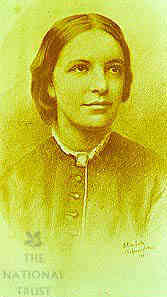
Last Friday, the Church Commissioners made a decision to sell their remaining holdings of property in the Octavia Hill Estates. The press release announcing this decision is here:
Church Commissioners select buyer for London residential properties.
This action was opposed before the decision was taken, and continues to be opposed by a variety of groups. Some reports on this:
Ekklesia Church of England accused of acting unethically over homes sale
LondonSE1 Waterloo and Union Street homes sold by Church Commissioners
BBC MPs’ shock at church homes sale and Protest on church homes sell-off
Guardian Archbishop intervenes in row over £200m estates sale.
24dash.com Octavia Hill residents stage protest over Church of England’s decision to sell homes
A letter, from the three MPs whose constituents are affected by this, to all members of the synod was issued today, and the text of it appears in full below the fold.
1 Commentwomen bishops: the opponents rally
Updated Friday
In the Church of England Newspaper there is an article listing Roger Beckwith, Wallace Benn, Gerald Bray and Mike Ovey as contributors, which sets out Why evangelicals are unhappy with the Guildford proposals.
And another article in the CEN reports on the Forward in Faith rally last Saturday: Church is treating us like children says bishop and Bishop Lindsay Urwin wrote in his local newspaper that Women bishops – compromise ‘won’t solve problem’.
Detailed reports from the FiF rally are to be found here, and here.
Update The Church Times has an extensive report by Glyn Paflin on the FiF event: Catholics will take TEA if it’s ‘fairtrade’.
11 Commentscivil partnerships: Ecclesiastical Law Journal article
The Ecclesiastical Law Journal is published by the Ecclesiastical Law Society. The January issue contains an article entitled The Civil Partnership Act 2004, Same-Sex Marriage and the Church of England by Jacqueline Humphreys, Barrister.
The Editor of the Journal, Mark Hill, has given his permission for this copyrighted article to be reproduced by Thinking Anglicans, and you can read it in full here.
In an editorial in the magazine, Chancellor Hill comments on the article as follows:
Jacky Humphreys offers a detailed critique of the Civil Partnership Act. The Act will have a profound effect on our collective understanding of society. Her article merits thoughtful reflection. I have the misfortune of differing from her in one minor but significant respect. I do not consider that the existence of a civil partnership carries with it by implication the inference that it is a sexual union. Far from it — the partnership is financial in nature dealing with joint ownership of possessions and rights of inheritance. I would therefore consider any enquiry of a civil partner into the nature of his or her partnership to be unacceptably intrusive and a breach of the right to respect for one’s private and family life.
It seems pretty clear that the House of Bishops Pastoral Statment accepted Chancellor Hill’s view that a CP is not necessarily a sexual relationship. It is to be hoped that all bishops will also heed his view of the Human Rights consequences that follow from such a position.
The section of the article to which Chancellor Hill’s comment relates can be found here. However, it pays to read the whole article right through.
Following a detailed comparison of Marriage and Civil Partnership, the author concludes that:
In my view, the 2004 Act has an understanding of civil partnerships that are voluntary, permanent, sexual, monogamous, potentially mutually supportive and potentially nurturing of children in the same ways that a marriage is understood to be within English law. A civil partnership is probably also understood as requiring sexual fidelity in the same way marriage does, although confirmation of this will only be obtained once judicial implementation of the provision takes place. In these ways then, civil partnerships are conceptually the same as marriage.
The key conceptual difference between civil partnerships and marriage is that one is essentially same-sex and the other is essentially opposite-sex, with the corollary that children cannot be conceived naturally by the partners. There are some practical differences in law relating directly to that physiological difference, namely the absence of provision regarding non-consummation and adultery and, in the usual run of things, the conception of children. Therefore whether it is correct to regard civil partnerships as same-sex marriage depends on whether one regards those aspects of marriage that are the same as civil partnerships—voluntary, permanent, sexual, monogamous, mutually supportive, nurturing of children and probably sexually faithful—as more or less vital to the definition of marriage than the key difference, which is the sex of the persons entering the status. Is heterosexuality the essential conceptual component of marriage, or is the term ‘marriage’ in danger of becoming cheapened by this narrow focus on the gender of the participants?
The third part of the article deals with several specific practical issues: Clergy Discipline and Employment, Occasional Offices, Blessing Services, and the Admission to Communion of Notorious Offenders.
Her concluding section is reproduced below the fold.
39 Commentselections to Archbishops' Council
The results of the clergy elections for the Archbishops’ Council have been announced:
Archbishops’ Council: Clergy members elected.
This completes the current round of elections to the Council; a complete list of members can be found here.
0 Comments